A deck. A ship.
A very long way home.
Build your spacecraft one card at a time. Outsmart orbital hazards. Bring the science home.
Challenge: Space Mission Design Game
Team: Dammit Jim, I'm a vibe coded game not a mission simulator
Krzysztof Radomski · NASA Space Apps 2026
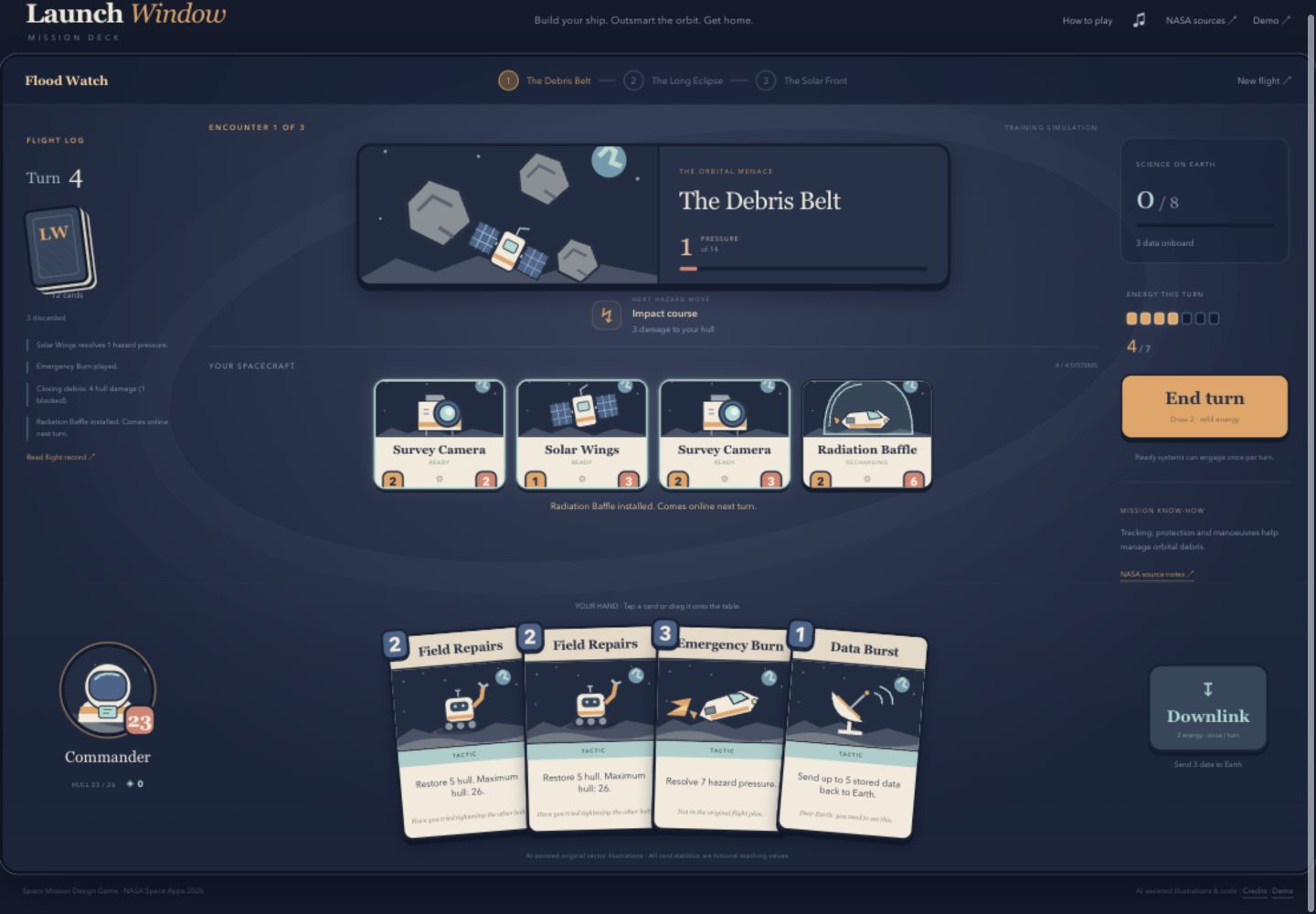
Actual game capture · AI-assisted original text, code and vector illustrations · Silent demo
A hazard’s turn
is never a mystery.
Ready systems engage once per turn. Resolve enough pressure to clear the encounter before damage overwhelms the hull. Armour absorbs hull damage, but some hazards also damage every installed system.
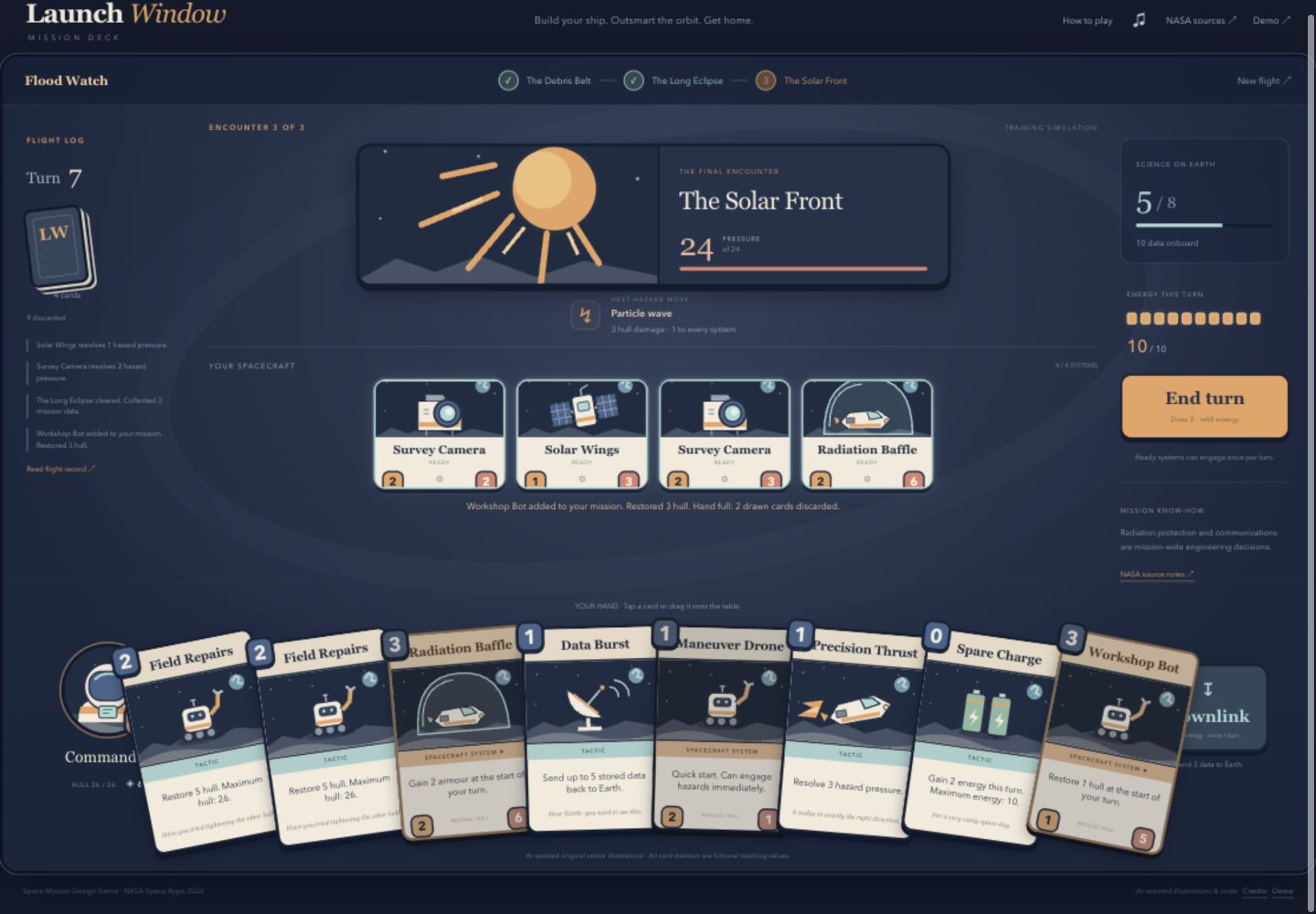
Actual game capture · Fictional engineering-card combat metaphor
Earn help for
the road ahead.
Clear an encounter and choose one new card. Your installed systems stay with the spacecraft. Decide whether the next challenge needs power, protection, communications or repair capability.
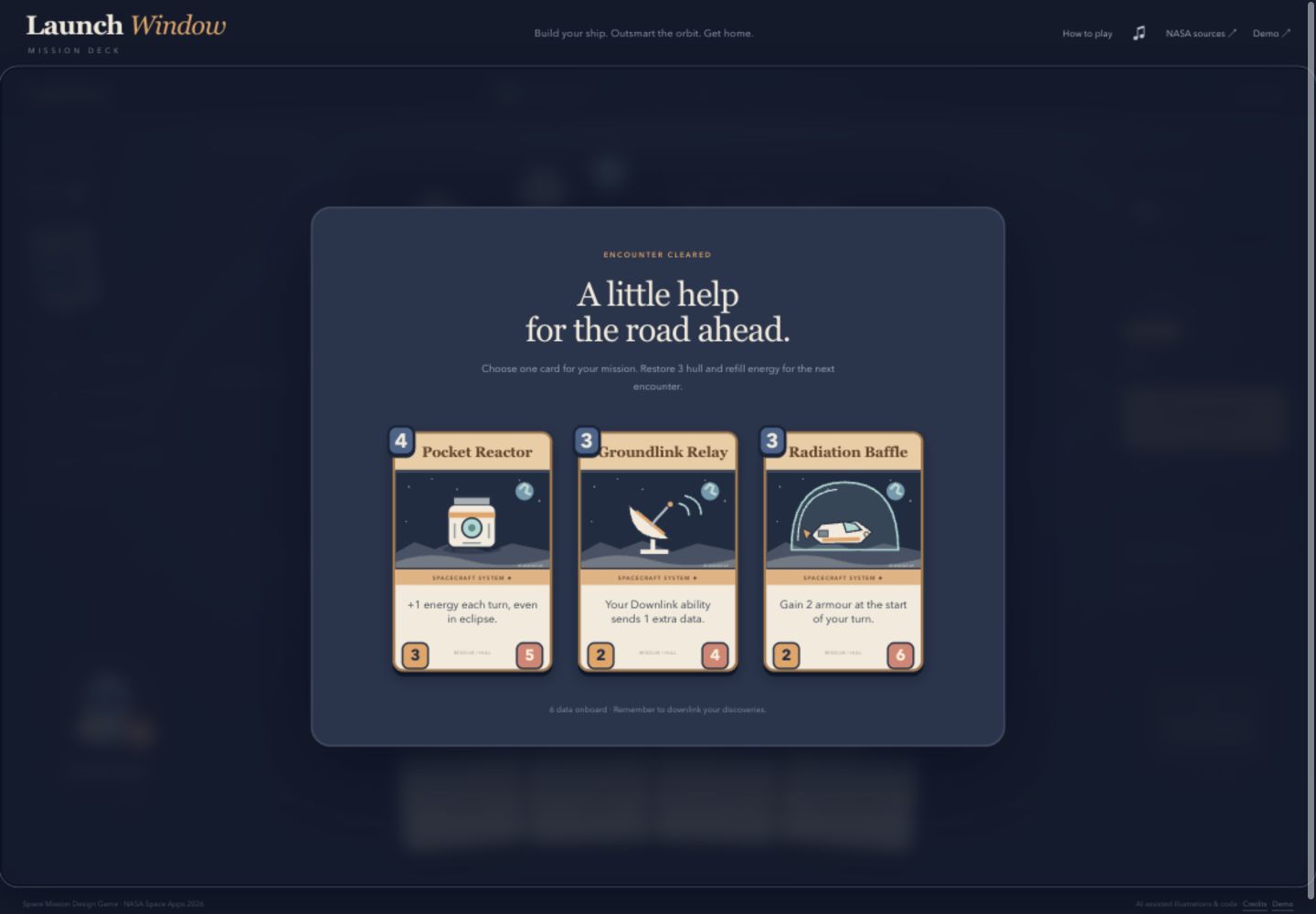
Actual game capture · AI-assisted original vector illustrations
Onboard data
is only the beginning.
Use Downlink or Data Burst to return science to Earth. Clearing all three hazards is not enough if the mission’s science target has not been met.
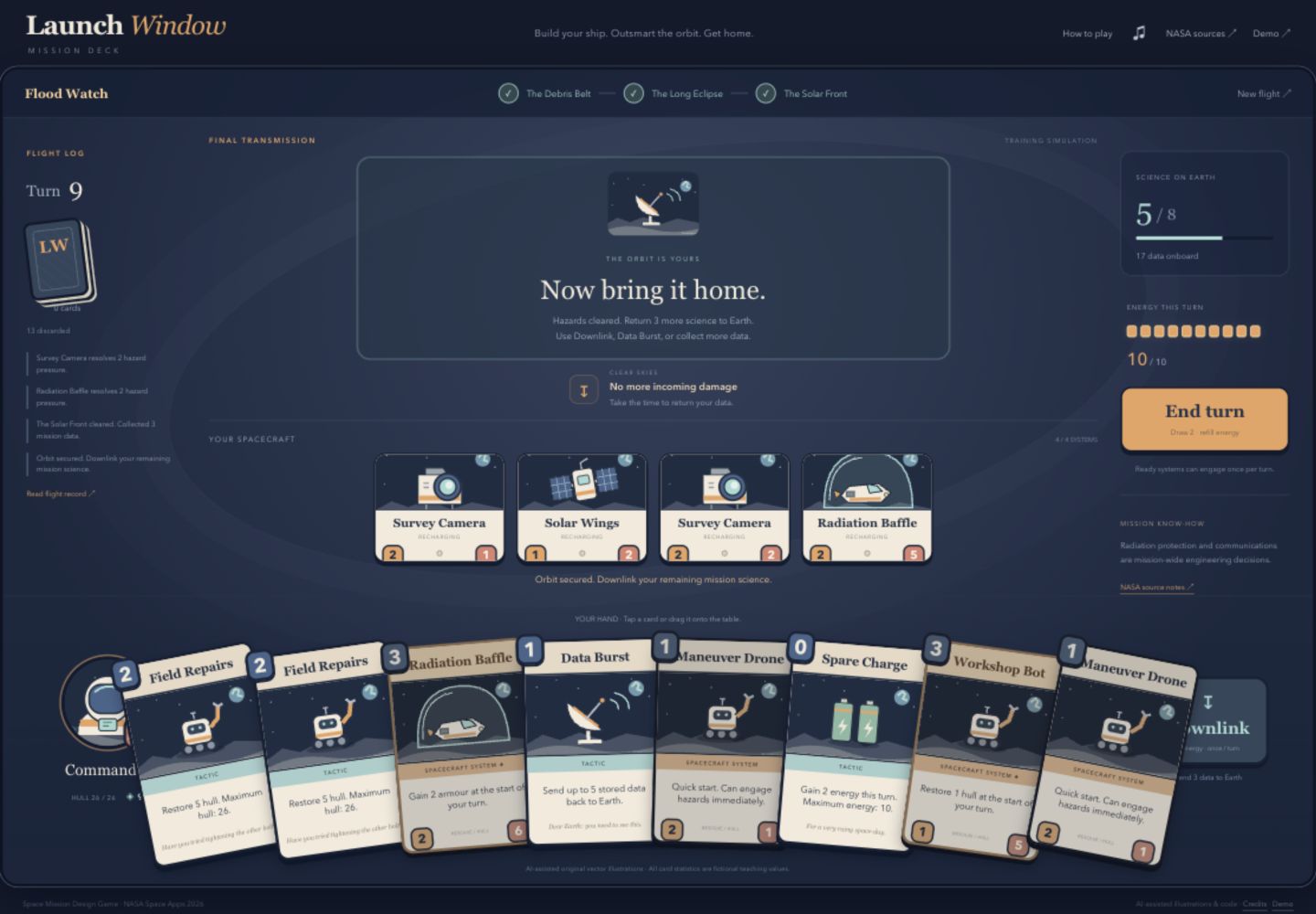
Actual browser run: 3 encounters cleared, then a separate final downlink
A mission you can
play, revise and explain.
A real browser playthrough cleared three encounters on turn 9 and returned 8 science. The game also supports losing the hull, a causal flight record and a fresh attempt.
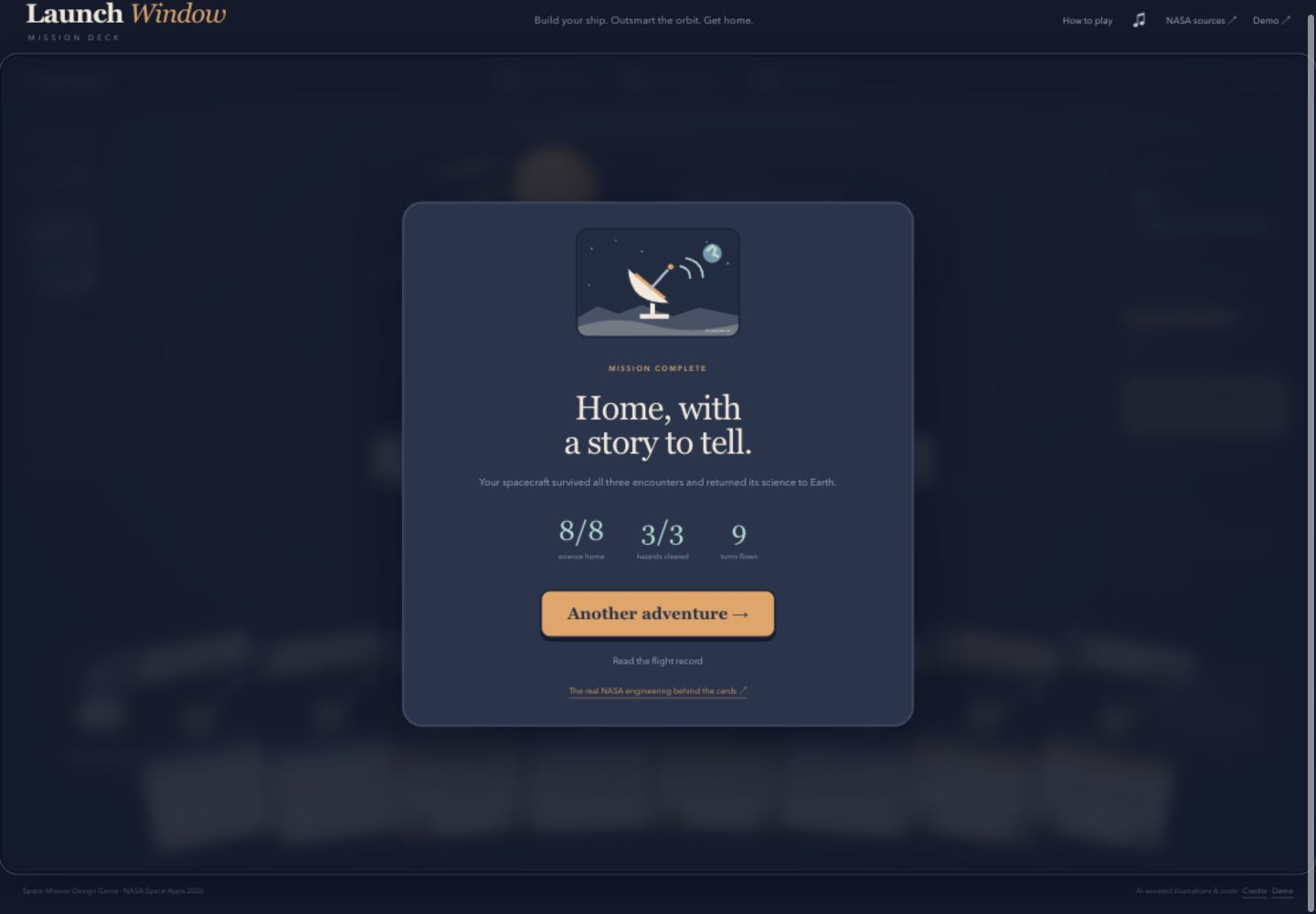
Next step: classroom playtests to see whether players can explain a power–protection–communications trade-off. Learning outcomes are not yet measured.
Actual game capture · AI-assisted original text, code and vector illustrations